I use a metaphorical lens to see the way the city works and decided to share that here:
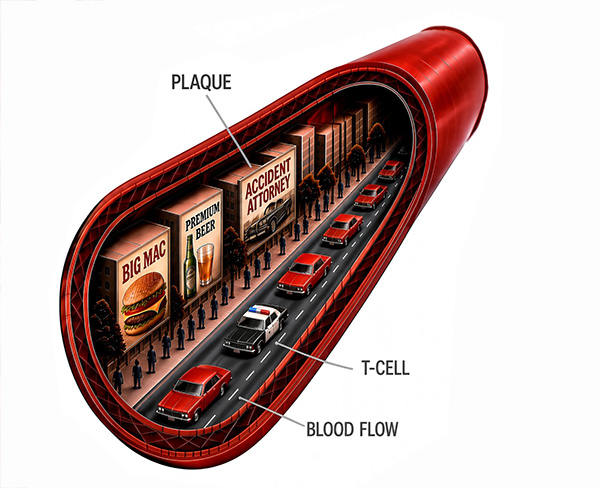
In it pedestrians are blood cells. Streets are veins and arteries. Police are T-cells. Rescue units clot. Advertisements are plaque. City government is the brain. The media are the body’s nervous system. Official signage is innervation: commands fixed to the vein wall that restrict the cell’s movement. And it's also just a fun way to piece things together.
Within that metaphor I can in turn see how my work functions: as nutrition, as medication, as a virus, as flushing the veins, or as staining things that should be removed. The work taken out of the vein loses that kinetic function and the studio becomes a lab that can function like an aquarium. Pedestrians can enter and see but not experience.
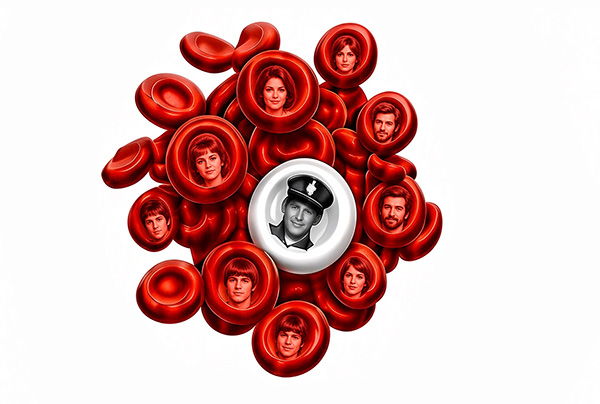
Virus
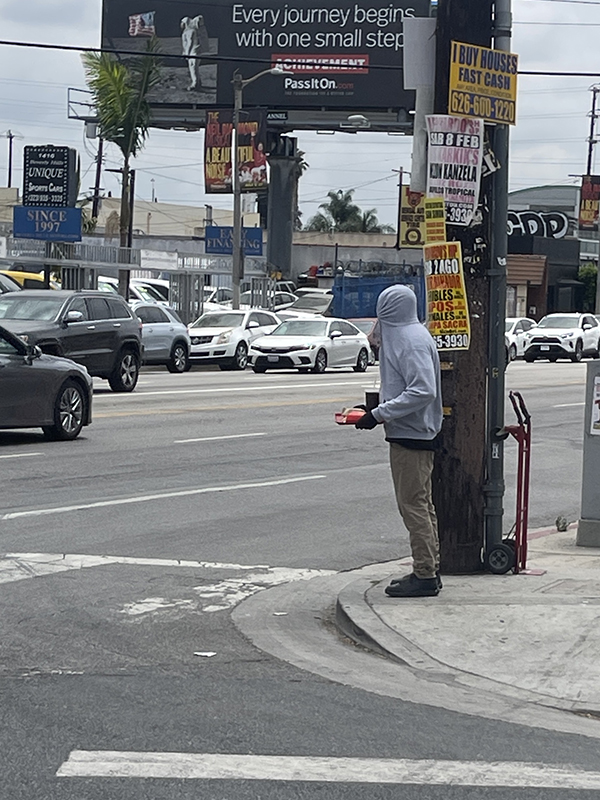
This is the best-fit name for the hyper-realistic human sculptures I create and install in public space. They are camouflaged: no longer identifiable as art or as artificial, but as blood cells introduced into the vein. They are generally installed as visual outliers — self-marginalized, abnormal — so that other cells encounter the anomaly directly. The intent is the reaction — a wake-up call that distorts the social fabric and puts the environment into question. The camouflaged cell acts as a catalyst. What is normal? What is allowed? If police or a fire truck arrive, that arrival shows how narrow the permitted line is. No loitering. Cross here. Follow the signage. Spend at the shops. Look at the ads and buy, whether the product is needed or not.
Nutrition
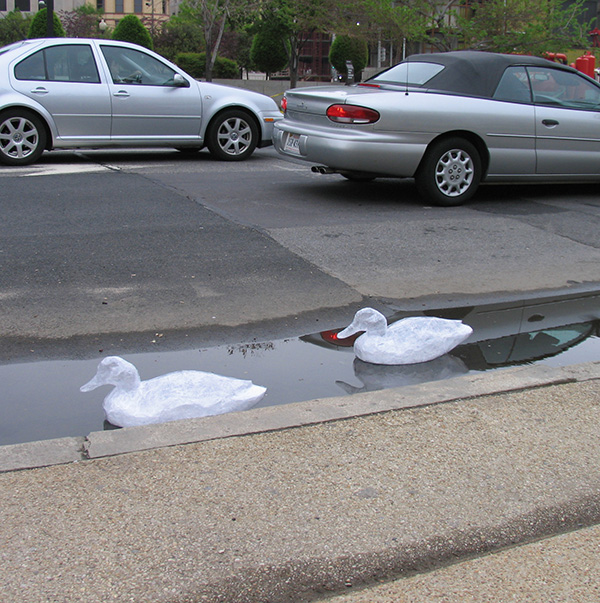
Work that is public and asks nothing in return. Tape ducks in gutters, dogs among litter, a traffic circle used as a merry-go-round, infants pulling down stop signs (Storker Project).
It offers a visual interval in a field otherwise occupied by advertising, traffic, and official signage. It sells nothing.
Most of it is ephemeral. The city or the public destroys it.
Medication
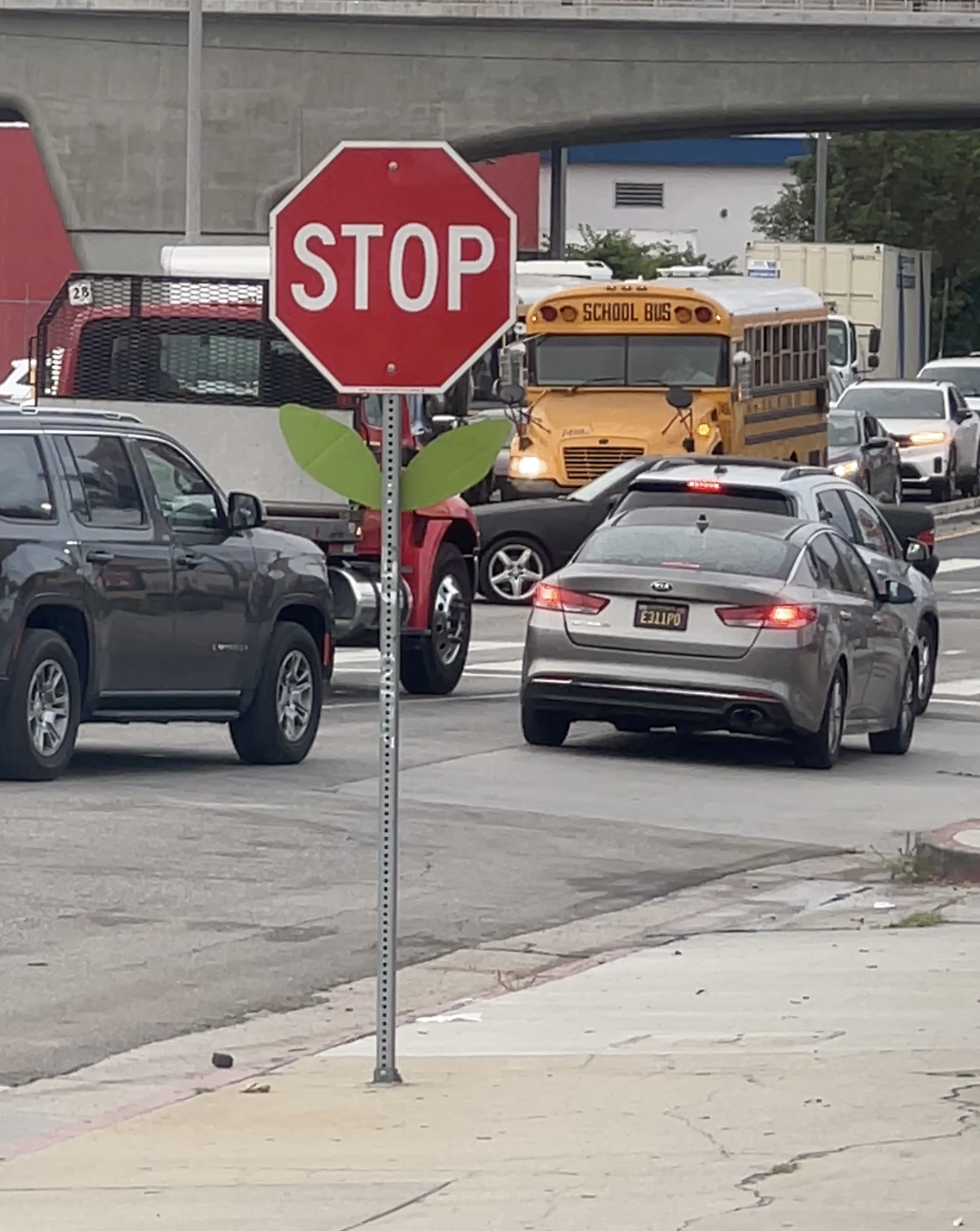
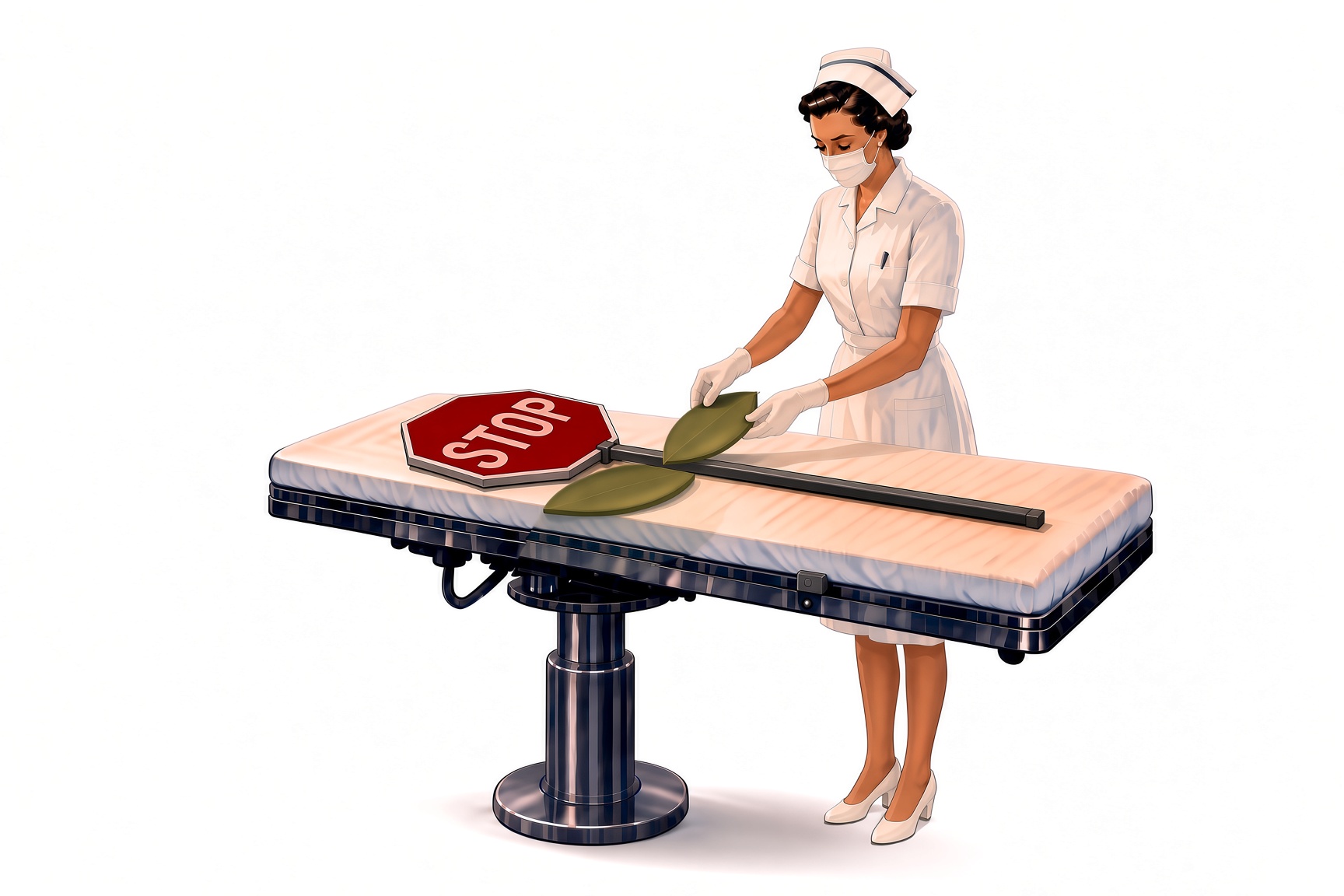
Treatments that go after civic hardware without damaging it. The effect may be temporary. A stop sign that continues to function as a stop sign after petals are added. The command stays but the tone is softened.
Other medication uses humor to poke conventional infrastructure like old bronzes or parking meters. The hack is temporary, but it subverts the city’s sense of entitlement to control public space for its own agenda.
Flush
Flush is work on blockage: plaque on the wall, stenosis in the walking space.
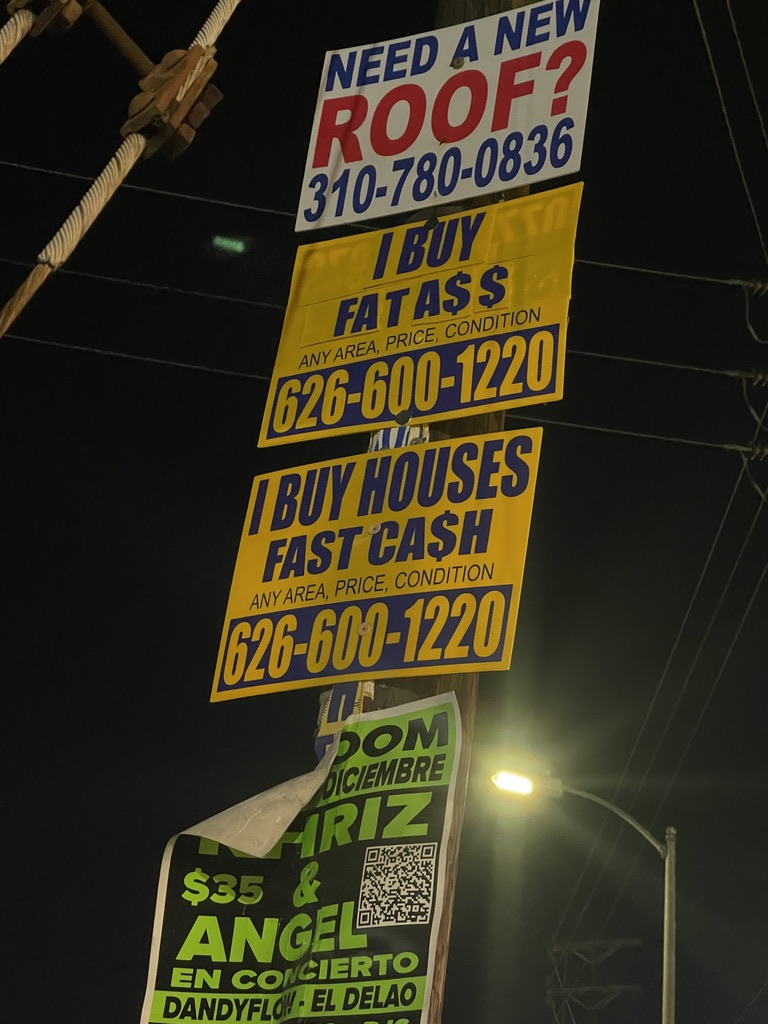
In the body, plaque is the deposit on the arterial wall; stenosis is the narrowing that follows. On the street the wall deposit is advertising. The narrowing is whatever steals walking volume — sidewalk dining that sprawls, dumped furniture, rental scooters, carts. Both constrict the cells.
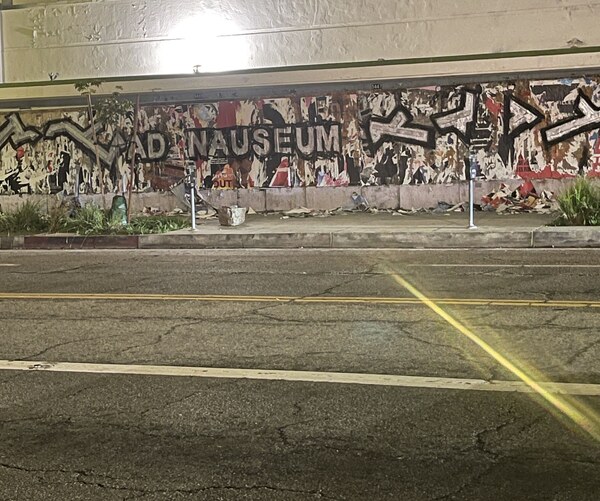
Work on the vein walls — stripping the surface to plywood, setting carbon bolts, grinding the heads, and locking the timber with construction adhesive (Ad blocker) — is an endarterectomy followed by a patch graft. The surface that accepted advertisements is removed and replaced with one that cannot. The change is permanent. Medication is not.
Bandit-sign remixes occupy a position between removal and marking. The plaque is rewritten rather than removed. To occupy an advertising surface is also to raise the cost of using it. In Los Angeles, a billboard that is repeatedly hit becomes expensive to maintain. The advertiser looks elsewhere. The deposit is rendered a bad investment.
Stain
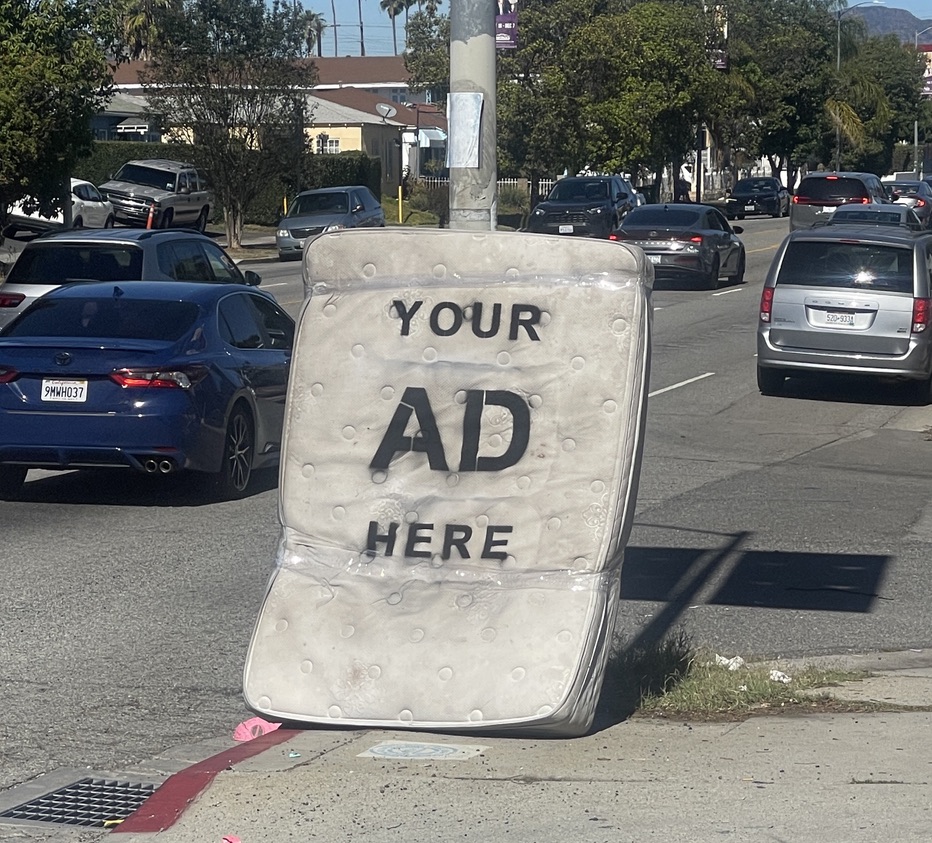
Staining marks what is already sitting in the walking space. Gold spray on uncollected trash. Words stenciled on a mattress. A cart put in socks. Furniture reassembled in the street. Dyeing the waste illuminates the blockage so the sanitation department fulfills the obligation to perform that bodily duty.
Lab
Viruses in a lab are not left in circulation. They are isolated, grown in culture, and stored — in a vial, on ice, behind glass. Lab is that condition: the same organism withdrawn from the bloodstream and held in a closed volume. In vitro.
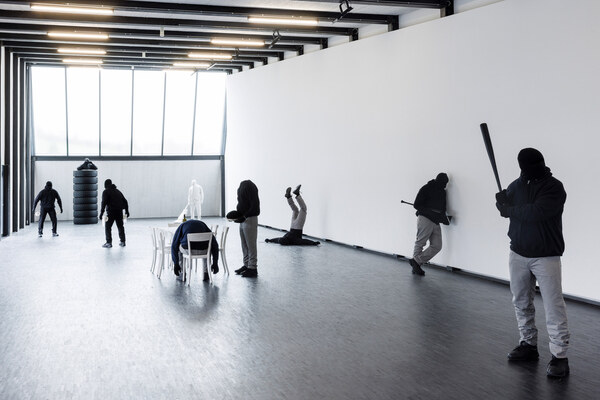
The figures remain the virus — camouflaged bodies — but the closed room mutates them. They occupy boxes, corners, the underside of furniture; they pass through a painting, hold a jump rope too long to use, turn a pair of jeans into a planter. A figure asleep in the corner of a room full of paintings is the indoor form at work. It challenges the art convention. It is not central. The work is not a campaign against the art world.
The work is not so much displayed as permitted to invent uses for domestic objects. A group of them in one room behaves as a group of cats brought indoors: the social structure persists, the available surfaces change.
Indoors the figures are largely static. Returned to the street, the same objects recover kinetic charge. A figure with a baseball bat in a gallery is a contained virus. On a sidewalk it is a different event.
The Human City is a way of reading placement. A figure in a vein is not the same object as that figure in a room. A petal on a working sign is not the same act as a board bolted over an advertising wall. The terms keep those differences from collapsing into “street art.” They are a barometer: whether the work nourishes, treats, infects, stains, belongs in the lab, or flushes is how right and wrong get decided in public space.
Read individual case studies of installations.