The Caretakers
Laguna Beach City Hall, California, 2019
Background
Laguna Beach is a city of 23,000, known for its historic artist community, more than a hundred galleries, seven miles of protected coves and beaches, and the coastal canyons around it. It is world famous for the Pageant of the Masters, the living-painting show. Freddy Krueger also lives there. In 2019 the Arts Commission invited us to install work for one month on the City Hall front lawn.
I titled it The Caretakers. One sculpture vacuumed the grass. One roasted a hot dog to the sun. The rest were absurdist situations typical of the close-faced hoodie figures I call the Moles. The Arts Commission and City Council approved it with a budget of $25,000, paid from the hotel tax tourists pay when they stay. My main interest in the project was the site. Despite its small size, an installation on City Hall was my first opportunity to work directly on the brain’s surface.
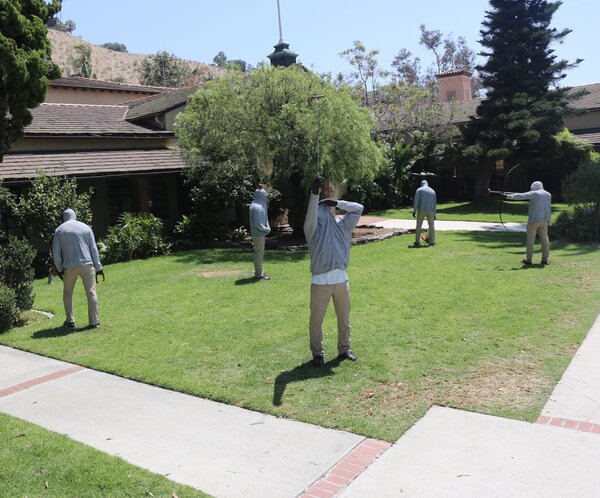
Installation
Because the lawn is adjacent to the City Hall entrance, it was drawing a lot of attention from officers walking in and out. A group of them later approached to investigate a report from a woman that one of the figures was holding a gun. I found it a bit bizarre and explained it was the handle of a vacuum cleaner, detachable, screwed into the hand of the sculpture and not assembled with the rest of the machine, which did not look like a gun, notwithstanding that the sculpture was not a person. The officer disagreed with me and said the handle could be perceived as a gun. I could have left it there but instead I told them that misperceptions about the sculptures were common amongst some people due to embedded paranoia planted by the government and media, but that they shouldn't reinforce this. I added that my work challenges norms with visual outliers and that this was an opportunity for them to learn as well. They didn't respond to the comment and left. I doubt they appreciated it, but they had engaged me so it was a fair play on my side I felt.
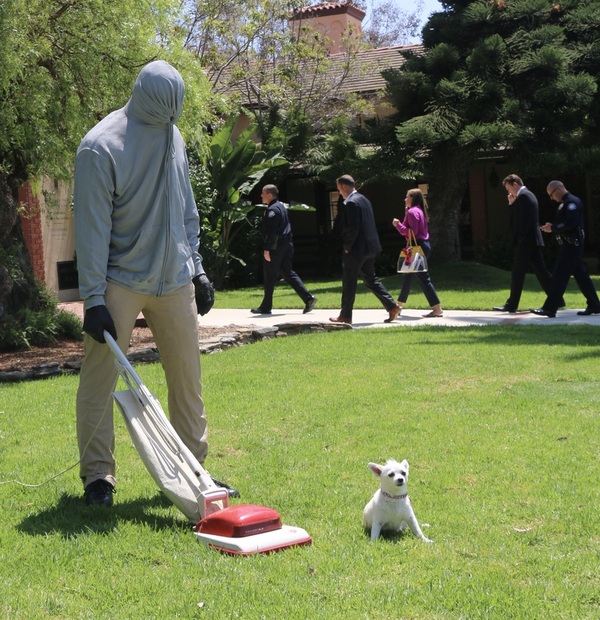
Reaction
The city’s Facebook post drew more than 160 comments, most of them negative. People said the work was creepy. They said local artists had been passed over for an outsider on civic grass. I do not use an artist statement. I leave the work open. The Arts Commission tried to manage the reaction by calling it a global-warming piece. Councilman Peter Blake told NBC Los Angeles that the hoods shielded the faces from the sun and that the figure with the hot dog was cooking it in the heat. Blake also owns Peter Blake Gallery on Ocean Avenue, a serious room for California minimalism, not a tourist shop, so his reading carried weight. The arts commission director said the same thing and added that climate had been my intention. In other words they lied.
Inside Edition and UPI then lifted a local television story. A bystander said, “They look like terrorists and it really freaks people out at night.” They put eerie music under it.
Press
Los Angeles Times / Daily Pilot
Orange County Register
NBC Los Angeles
CBS Los Angeles
Inside Edition
Inside Edition, YouTube cut
UPI
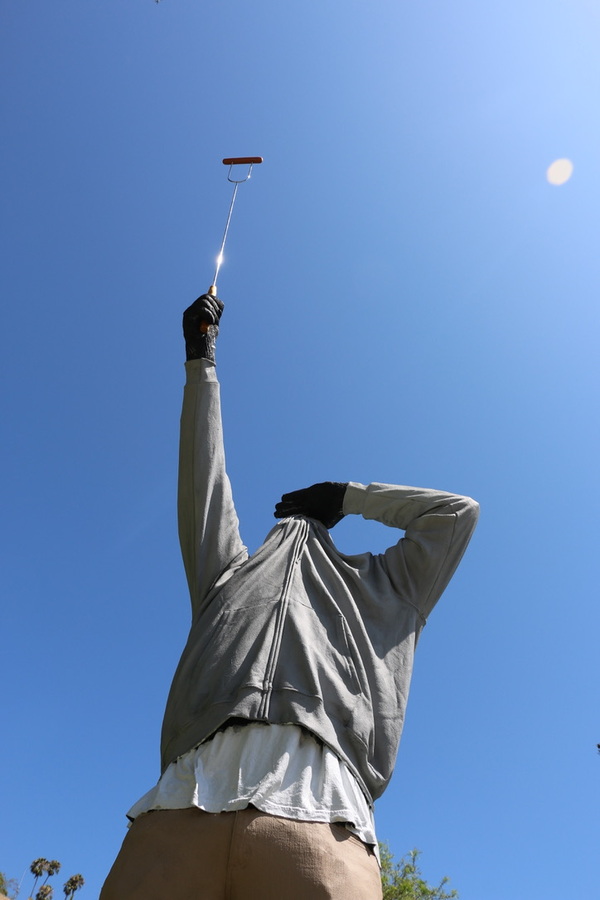
Lens
This was a sanctioned virus on the brain’s own grass, sitting where anyone could walk out the front door and see it. The first T-cell swarm treated the virus as a threat. That reaction showed the city’s malfunction.
The virus still belonged to the organ. It was clustered cells, paid for with city funds, grown by a public arts council. A benign extra-axial tumor: a mass on the covering of the brain, not inside the offices, not shutting the building down.
The pedestrian cell who called them terrorists was used by the nervous system to spread panic. Another comment said you could not know if they were a threat because “who has time to investigate,” which is to say the blood cells should perform a biopsy. The climate caption was the brain telling the rest of the body that the work was not a threat, and that it was nutrition.
The virus stayed for the full month. No vandalism. No police removal. The agitated cells settled and endured it.
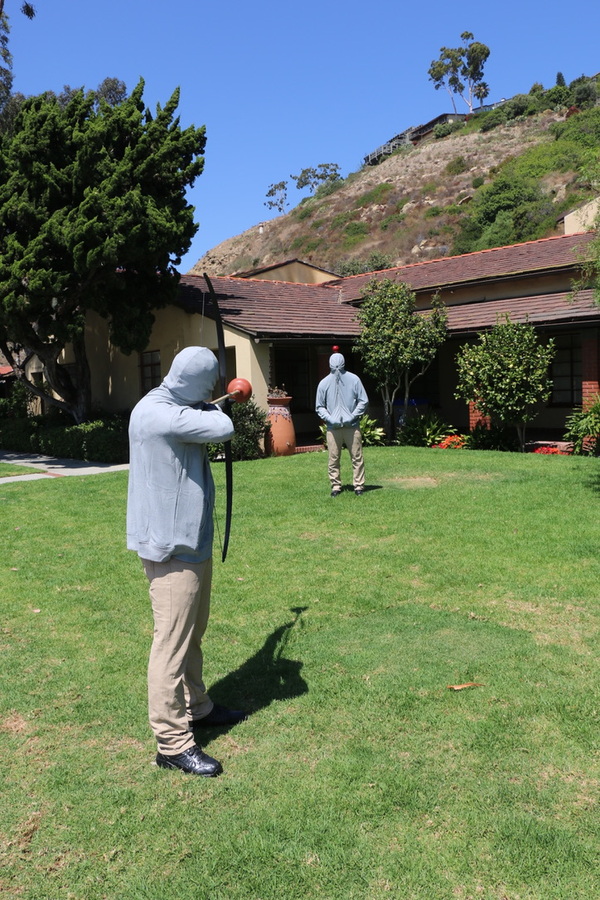
Conclusion
Laguna Beach is a small city, but it is not a closed village. It is a tourist town that sells itself as an art colony. Galleries sit on the highway. The Sawdust Festival runs in summer and returns in winter. The Pageant of the Masters, living pictures staged each summer since the 1930s at the Festival of Arts, is the extravagance the town is known for worldwide. The Arts Commission is funded by the hotel assessment. The stated job of that money is to give hotel guests a reason to come and a reason to return. Sending that money to an outside artist instead of a resident is, by and large, a slap in the face to the local arts community. The council may believe local artists need inspiration from outside. That belief is itself insulting. I side with the local community in retrospect. Their art is a large part of the city’s identity.
The press stoked the soap opera in the comments and did what it most wants to do: go viral beyond the body. That is why media fails the body. Its messaging serves itself first. It manufactures panic. The woman who called the figures terrorists, and who was treated as if she spoke for the town, was that panic. Inside Edition did not correct the line. It amplified it and put a soundtrack under it.
Last, the City Hall lawn proved itself to be a safe haven for the virus. United States police who normally interfere and remove the work were tasked not only to endure it but to protect it. It all becomes part of the absurd irony of the Human City that the installations expose.
Glossary
Virus. A figure that passes as a cell long enough for other cells to stall. It is a virus when it is seen.
Cell. A person in the city.
T-cell. Police. Routine immune patrol.
Brain / organ. City government. Here, City Hall and the lawn that covers it.
Nervous system. Media. It carries an encounter from the street to other cells and beyond the body.
Nutrition. Work the institution claims is good for the body. The climate caption was that claim.
Safe haven. A sanctioned site where T-cells protect the figure instead of removing it.